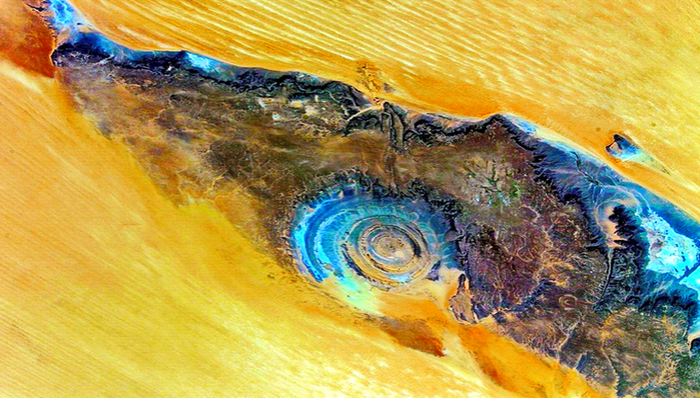
Deep within the vast expanse of the Sahara Desert, nestled in the heart of Africa, lies a unique and mysterious geological wonder - the Eye of the Sahara, also known as the Richat Structure. It’s not just a magnificent natural formation but also an enigma shrouded in questions about its origins and formation.

From a bird's-eye view in space, the Eye of the Sahara resembles a large, wide-open eye, with a clearly defined circular shape spanning approximately 50 kilometers in diameter. However, from ground level, this structure becomes more elusive, camouflaged within the haze of the desert and the passage of time. Discovered in the early 20th century, it has captivated the attention of geologists, researchers, and travelers from around the globe.
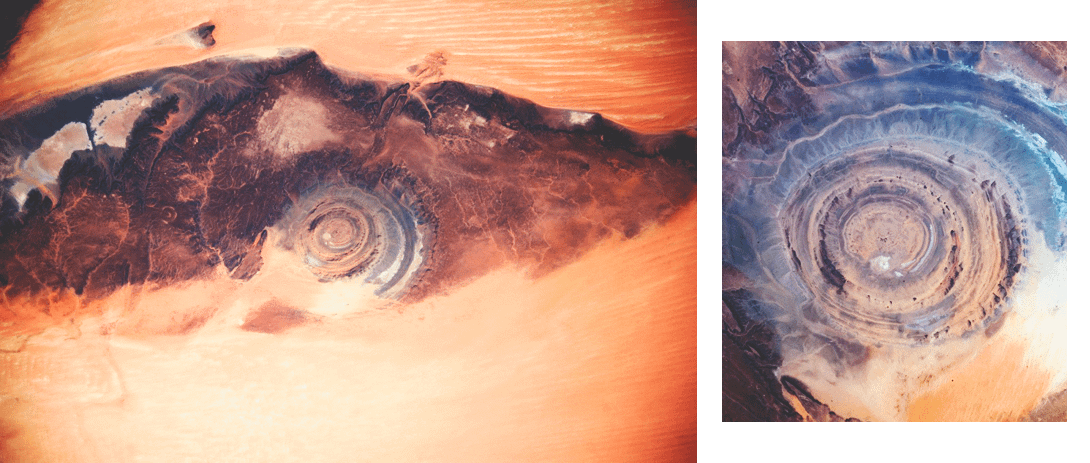
Scientists believe that the Eye of the Sahara was formed through natural geological processes, evolving over millions of years. Initially, it might have been a plateau or a volcanic structure, but through the forces of weathering, the presence of water, and various other factors, it transformed into a modern-day depression with distinct concentric circles and radial valleys.

One of the mesmerizing aspects of the Eye of the Sahara is its ability to change colors over time. When illuminated by sunlight, this structure can transition from vibrant golden hues to vivid oranges or reds, creating a sense of mystical and enigmatic allure.

Beyond its geological fascination, the Eye of the Sahara holds historical and cultural significance. The surrounding area was once inhabited by the Amazigh (Berbers) and still preserves numerous relics and cultural imprints of their heritage.
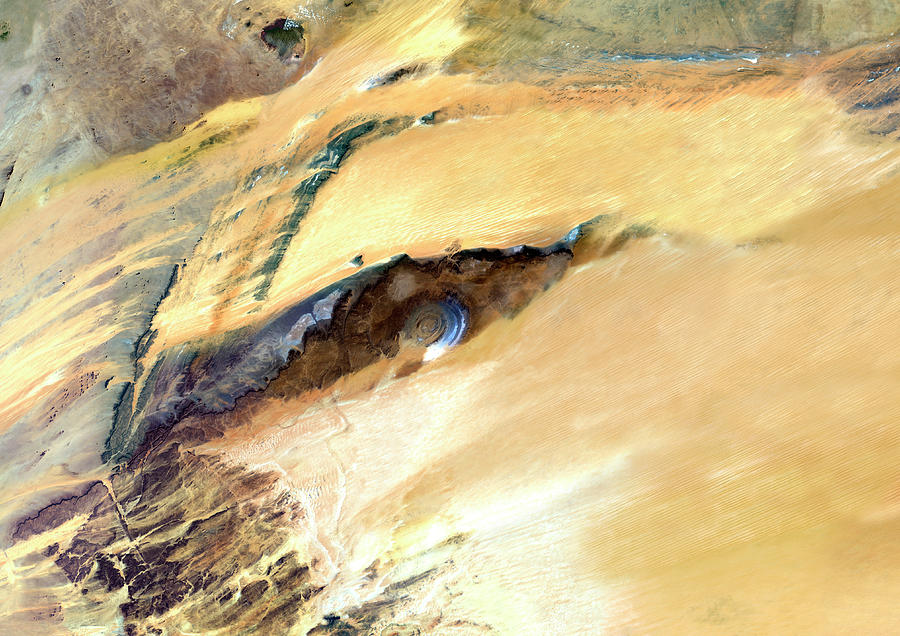
Despite extensive research efforts, there remain many mysteries surrounding the Eye of the Sahara that are yet to be fully deciphered. Its diversity and marvelous beauty continue to serve as an endless source of inspiration for both scientists and enthusiasts keen on exploring the breathtaking natural wonders of our world.